

DoorDash, Amazon Prime: How "Easy" Choices are Quietly Draining Your Bank Account
I'm noticing a trend more and more among the clients I work with: They are overspending, but not on luxury items or super expensive vacations. Instead, they are paying to save time and mental energy—especially when it comes to decision-making. Whether it’s food delivery, subscription services, grocery pickup, or late-night Amazon orders, these conveniences have become our go-to solutions for managing chaotic, busy lives.
The challenge? These “small additional charges” —as they are marketed—have quietly drained hundreds and thousands of dollars from bank accounts every single month.
Do these sound familiar?
"I don't grocery shop because I'm exhausted." - Delivery fees.
"I don't have time to compare prices." - Amazon
"I don't meal prep anymore." - DoorDash or UberEats several times a week.
"My weekends are to busy to clean." - Regular cleaning service
“It's too hot to wash my car” - Car wash subscription.
As a coach, my goal isn't to discourage anyone from using convenience services. Life is intense, and sometimes you just need to outsource a task to keep your sanity intact. Instead, I focus on helping my clients evaluate which of their choices are supporting the life they want to build—and which ones are just robbing their future.
Burnout and the Exhaustion Tax
When we are mentally drained, our brain craves the path of least resistance. Psychologists call this decision fatigue. By the time 6:00 PM rolls around, you have made thousands of decisions at work, with your family, and in your life. You literally do not have the bandwidth to decide what to cook, let alone drive to the store to get the ingredients.
So, you pay the "Exhaustion Tax." You click a button, food arrives, and your brain gets a brief break.
There is no shame in this. But we have to look at the math. A $15 meal that costs $32 after service fees, delivery charges, and tips is a steep price to pay for a temporary reprieve. When this happens three or four times a week, you aren't just buying dinner; you're financing a leak in your financial foundation.
What to do — Conduct a quick Convenience Audit
To take back control without sending your stress levels through the roof, categorize your convenience spending into three distinct buckets:
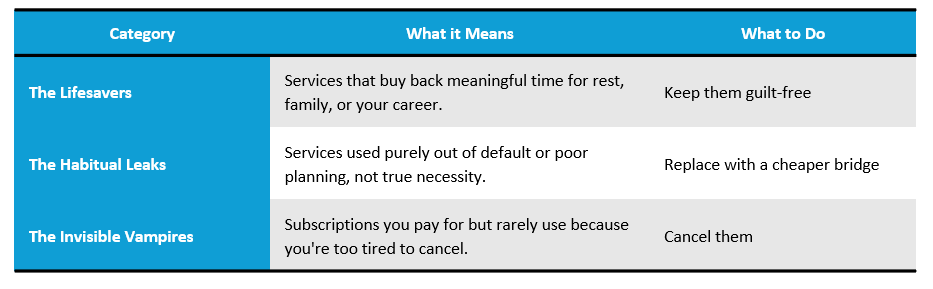
Conduct a Convenience Audit
For example, if hiring a cleaning service frees up your Saturday so you can be present and relaxed with your kids, that is a Lifesaver. Keep it.
But if you are ordering DoorDash simply because you forgot to thaw the chicken in the freezer, that is a Habitual Leak. You don't need a home-cooked, five-course meal—you just need a lower-cost convenience bridge, like a $6 frozen pizza from the grocery store.
Reclaiming Your Money (Without Crashing Your Energy)
If you’re ready to stop paying the Exhaustion Tax on autopilot, start with these three steps this week:
Total the Tax: Look at your bank statement from last month. Highlight every charge that was born out of tiredness. How much did it add up too? Don't judge it; just look at it.
Pick Your One "Non-Negotiable: Choose the one convenience that genuinely protects your mental health. Keep it!
Build Low-Energy Safety Nets: For the habits you want to cut back on, create easy alternatives. If grocery shopping drains you, keep the grocery pickup service, but skip the third-party delivery apps. Stock your freezer with easy, high-convenience meals for the nights you "just can't."
Your Next Step
Convenience is beautiful tool when it is used intentionally. But when it becomes your default coping mechanism, you are trading your long-term financial freedom for a few minutes of temporary relief.
Do a quick sample: What is one convenience service you are paying for right now that is a "Habitual Leak" you're ready to swap out?
Lana, Financial Coach
Want more insights like this? Join my monthly newsletter. Sign up here
www.lwilliamfinance.com